Vivah Sanskar (Wedding)
Hindu wedding rituals are multi-day celebrations. It is focused on spiritual blessings, purification, and joyous festivity.
The wedding ceremony can be customized for Gujarati, North Indian, South Indian, or community-specific traditions while preserving the spiritual heart of Vivah Sanskar.
Weddings are vibrant celebrations that blend rich cultural traditions, intricate rituals, and large-scale festivities. While customs vary widely by region and religion, they typically feature several key pre-wedding, ceremony, and post-wedding events.
These ceremonies are rooted in ancient Vedic times, aiming to prepare the couple spiritually while bringing loved ones together.
The ceremoies can be categorized broadly into:
- Pre-Wedding Rituals: Ganesh Puja, Madap/Mandvo Muhurat, Manek Stambh, Haldi (Pithi), Graha Shanti, Mameru
- Wedding Rituals: Baraat, Pokhanu, Hasta Milap, Mangal Phera, Saptapadi, Ashirvaad, Vidai
- Post-Wedding Rituals: Newly wed bride's welcome ceremony and family blessings
Pre-Wedding Rituals
While traditions vary by region and community, some commonly events often include the following ceremonies.
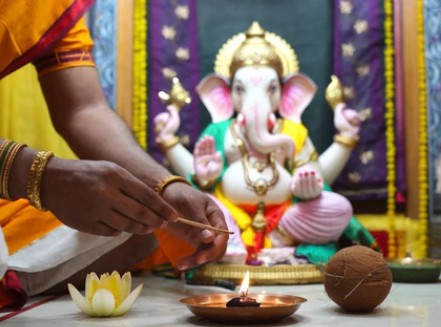
Ganpati Puja
The vital very first ritual in a traditional Hindu wedding. Performed just before the main wedding celebrations begin, to remove obstacles and ensure the entire wedding proceeds smoothly and harmoniously.
This sacred opening prayer sets the tone for all subsequent wedding festivities and family gatherings.
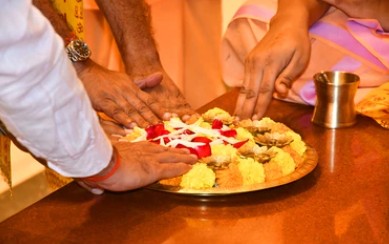
Lagna Sankalp
The Lagna Sankalpam (or Maha Sankalpam) is a sacred Vedic oath taken during pre-wedding ceremonies. It is spiritual declaration of the marriage's intent, the exact time, place, and ancestral lineage of the bride and groom.
Lagna Patrika (The Written Pledge), The priest reads aloud to the assembled family with Muhurat (auspicious dates and times).
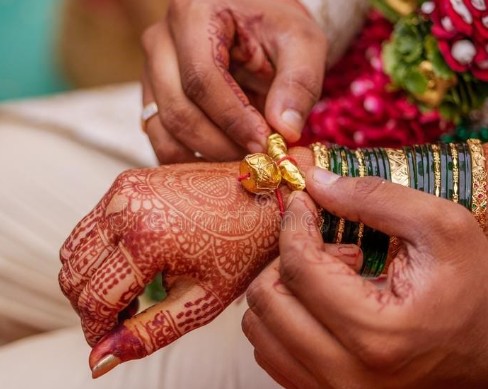
Madap/Mandvo Muhurat
Traditionally conducted at both the bride's and the groom's respective homes. The Mandap Muhurat (also known as Mandvo or Mangal Mahurat) is a sacred pre-wedding ritual where the foundation for the wedding canopy is blessed and constructed.
A sacred puja is performed on the first of the four main pillars (pillars) of the pavilion by offering kumkum, rice and flowers.
This ritual marks the auspicious beginning of the wedding festivities.
This ritual is performed at the homes of both the bride and groom at different times or on the same day in their respective pavilions.
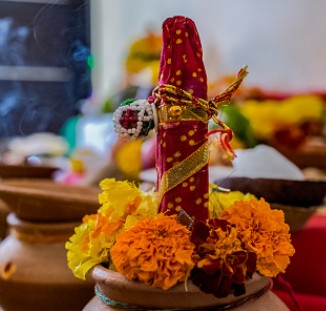
Manek Stambh
A Manek Stambh (decorated wooden stick or miniature pillar) dug into the soil to act as the primary foundational pillar. It serves as a sacred centerpiece to establish stability, invite prosperity, and ward off the evil eye during the pre-wedding rituals.
In modern settings, it is often placed upright in a decorative pot filled with soil.
This ritual is performed at the homes of both the bride and groom at different times or on the same day in their respective pavilions.
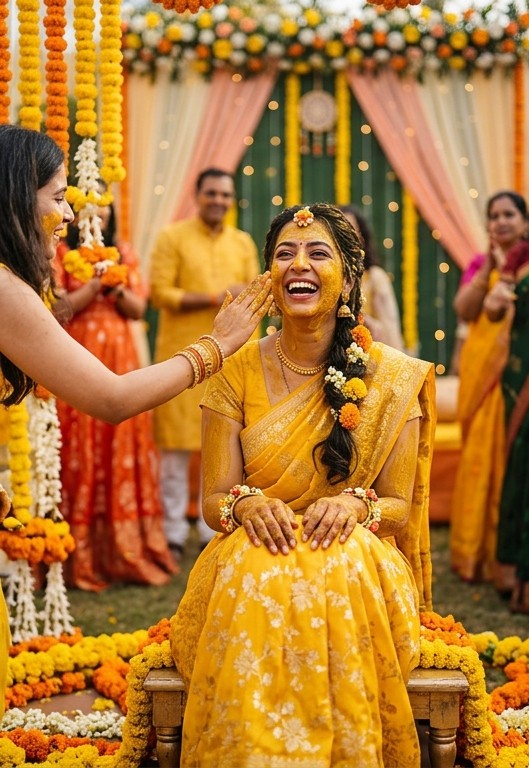
Haldi (Pithi) ceremony
The Haldi ceremony is a joyous and vibrant pre-wedding ritual in Indian weddings. Held a day before the main wedding, it involves family and friends applying a turmeric, sandalwood, and rosewater paste to the bride and groom's face and body. It symbolizes purification, and blesses the couple.
Widely known as Haldi, the ceremony goes by different names depending on the region and culture like Pithi, Mayian, Vatna, Gaye Holud.
This ritual is performed at the homes of both the bride and groom at different times or on the same day in their respective pavilions, or at the same time on same pavilions/stage together.
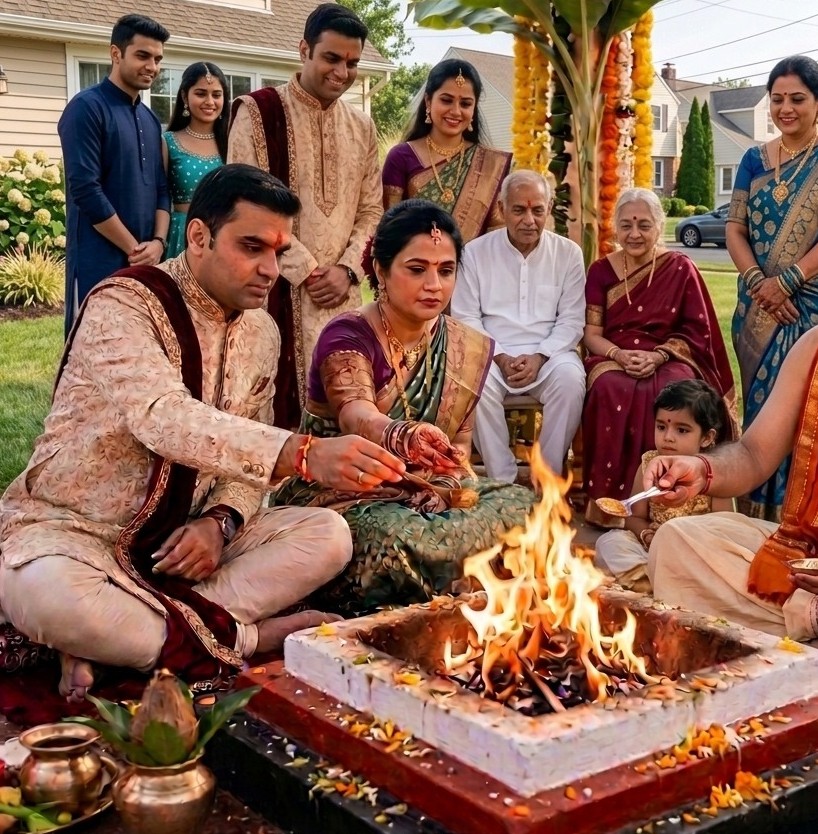
Grah Shanti / Santak
A Graha Shanti Yagna (also known as Santak Ritual) during pre-wedding ceremonies is a powerful Vedic ritual performed to pacify the nine celestial bodies (Nav Grahas).
It is designed to mitigate the negative effects of planetary imbalances (Doshas) and enhance positive cosmic energies, promoting health, prosperity, and peace during the wedding ceremony.
Often performed before the wedding to ensure an auspicious and harmonious union.
This ritual is performed at the homes of both the bride and groom at different times or on the same day in their respective pavilions.
Other Pre-Wedding Rituals
We understand that today's fast-paced world demands flexibility. We collaborate with you to customize the rituals, adapting them to meet your specific requirements, space and time constraints, without compromising on spiritual integrity.
While traditions vary by region and community, some other events pre-wedding ceremonies are:
- Mameru: Also also known as Mausalu, involves the bride or groom's maternal uncle (mama) and his family visiting to bless the to-be-wed and present with gifts and trousseau offerings.
- Chakda Puja (કુંભાર ચાકડા પૂજન): Chakda Puja and the 'Mod' (wooden pillars) for planting the potter's mandva are prepared by the potter. While establishing the sacred soil, the potter's 'Chakda' (pot-making wheel) is ritually worshipped. By respectfully bowing to the Chakda, auspicious pots (pots) are made from the soil.
- Gotrijo: It is a highly anticipated, festive Haldi-style ceremony where women of families gather to bring holy water from river or well to bless the couple.
- Chandlo Matli: The groom’s family formally visits the bride’s home, applying kumkum on his forehead, exchanging gifts, and officially fixing the wedding date.
- Varadh (વરધ): Varadh is an important pre-wedding ritual in Gujarati weddings. The women of the house walk in procession carrying earthenware pots or beautifully decorated vessels (which contain sweets and gifts). The main purpose of which is to exchange happiness and gifts between both the families. In today's modern times, beautiful and attractive designer pots or decorated plates are used instead of earthen pots.
- Mehendi & Sangeet: Elaborate henna application is followed by music, dance, and festive Garba and Dandiya nights to bring both families closer.
Wedding Rituals
Vivah Sanskar, a sacred Vedic wedding ceremony built around family blessings, Agni, vows, and joyful mandap traditions. The wedding ceremony can be customized for Gujarati, North Indian, South Indian, or community-specific traditions while preserving the spiritual heart of Vivah Sanskar.
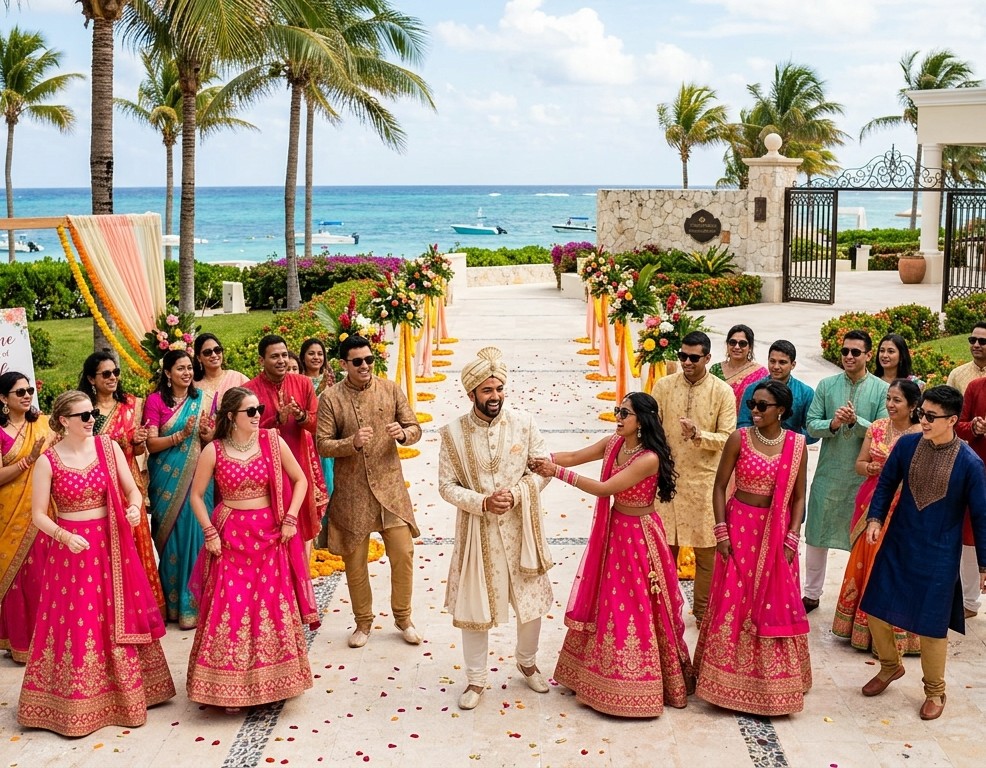
Baraat
The groom arrives at the venue in a lively procession with his family and friends, dancing to traditional drums and music.
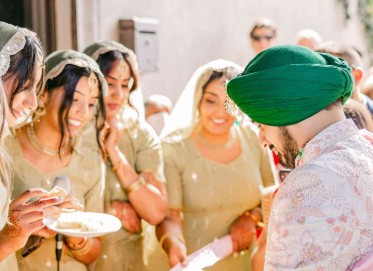
Dwar Dakhina (Groom's Block)
Before entering, the bride's sisters and female relatives playfully block the groom's path. They demand a "toll" or gifts—a fun-loving ritual to break the ice between the two families.
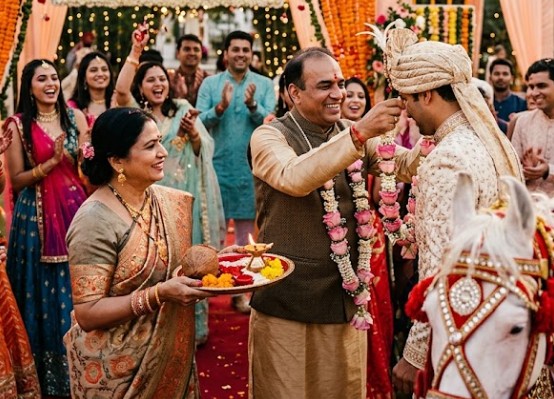
Groom's welcome
Traditionally the bride does not come to the entrance to welcome the groom. But recently modern weddings often break the tradition of hiding the bride from the groom before the ceremony.
If prefered, bride come to entrance to welcome groom and his family. Some bride's prefer not to, instead making a grand entrance down the aisle—the processional—is the most iconic moment of your wedding day.
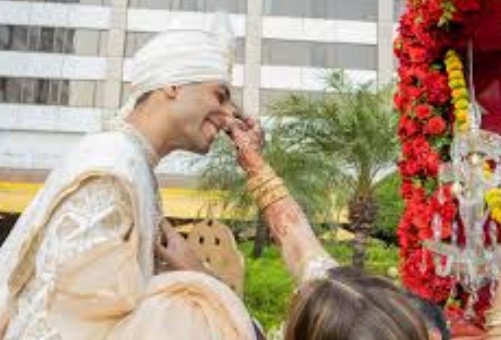
Pokhanu
The bride's mother and family welcome the groom at the entrance, traditional tilak (kumkum and rice), aarti (welcome prayer) and playfully tries to pull the groom's nose. The groom is then offered sweets and a sacred thread by Priest.
Just before stepping inside the venue, the groom is often tasked with crushing a small earthen pot (Matli) with his right foot.
Ganesha Puja
The ceremony begins with a prayer to Lord Ganesha to bless the union and remove obstacles. Traditionally, an Indian wedding is hosted by the bride's parents and begins with Ganesha pujan.
Groom's parents as guest on wedding mandap (altar) can also join in the Ganesha pujan.
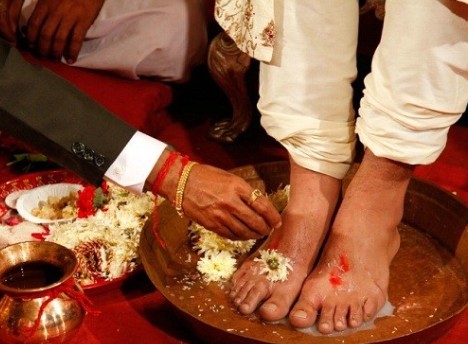
Madhuparka
The bride's parents wash the groom's feet with milk and water. He is then offered a sacred, sweet drink called Panchamrut.
Historically, the Madhuparka is the highest form of atithi-saparyā (guest reception), traditionally offered to kings, revered teachers, and sages.
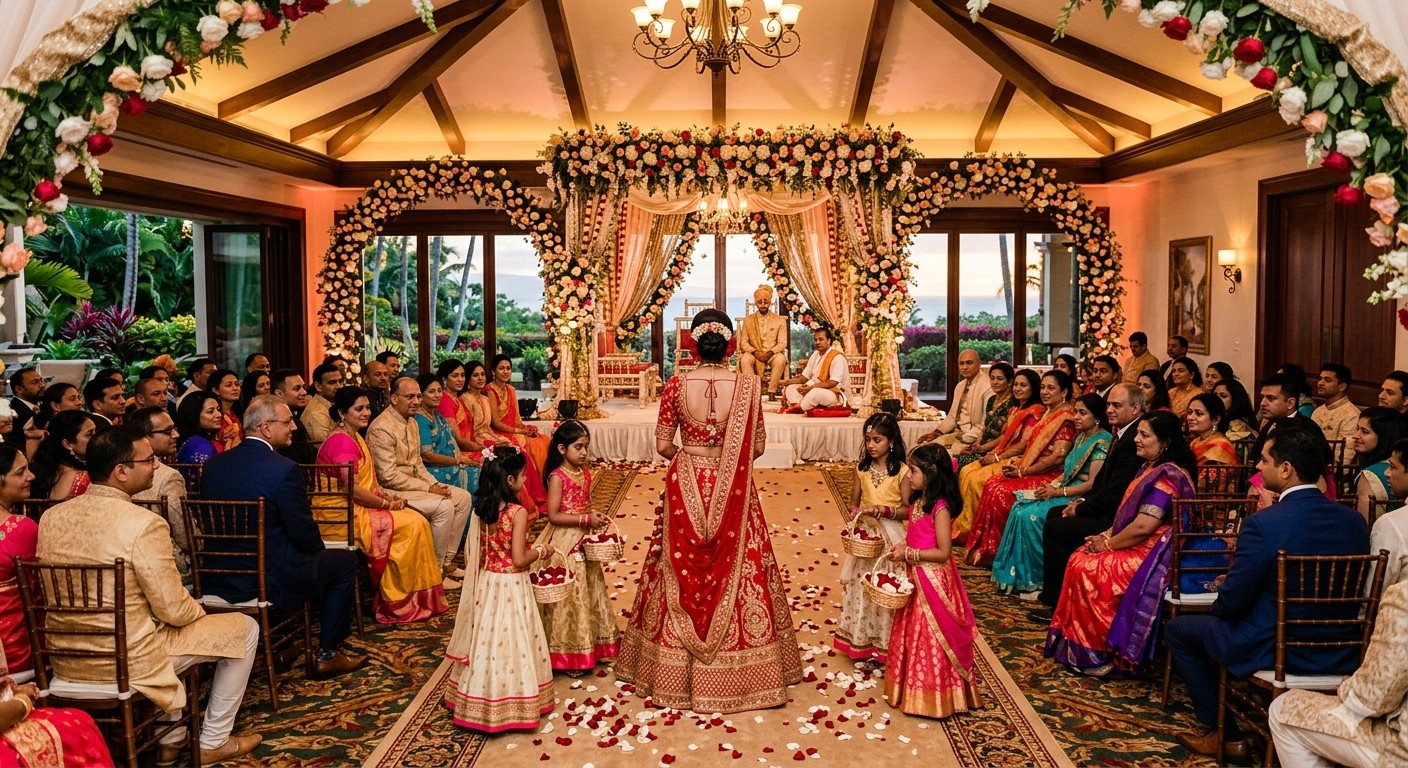
Kanya Aagman (Bride's grand entrance)
Kanya Aagman (the arrival of the bride) is the highly anticipated and sacred moment when the bride makes her first appearance at the mandap.
Traditionally, The bride is traditionally flanked by her maternal aunt and uncle, or her brothers. In many traditions, the bride walks under a beautiful, flower-adorned canopy held by her brothers. Modern days, some variations includes bride escorted by both parents or escorted by her bridesmaids.
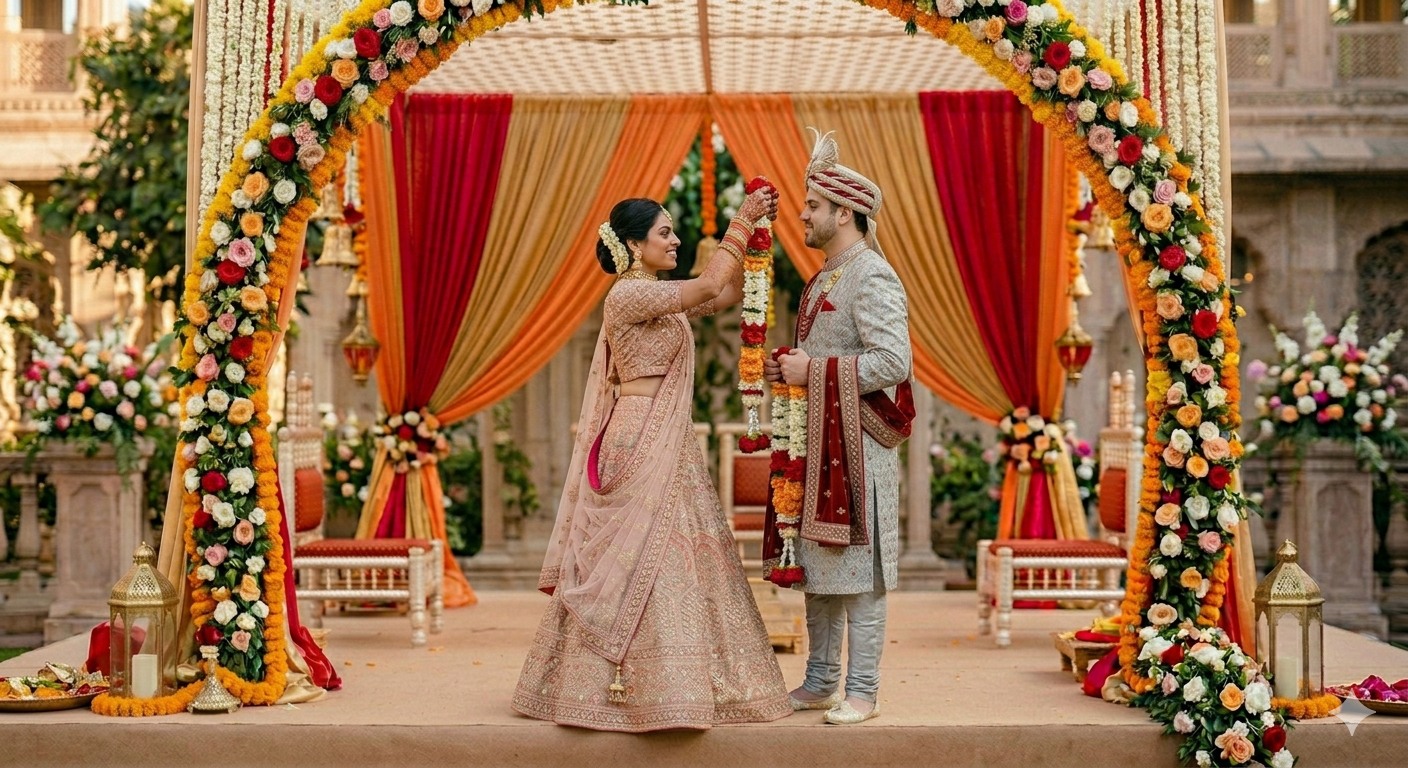
The Garland Exchange (Varmala)
The Varmala (or Jaimala), the bride offers her garland to the groom first, signifying her acceptance of him and his family. The groom then garlands the bride.
Modern Varmala ceremonies are highly energetic. Family members on both sides will playfully lift the bride and groom on their shoulders to make it physically difficult for the partner to put the garland around their neck.
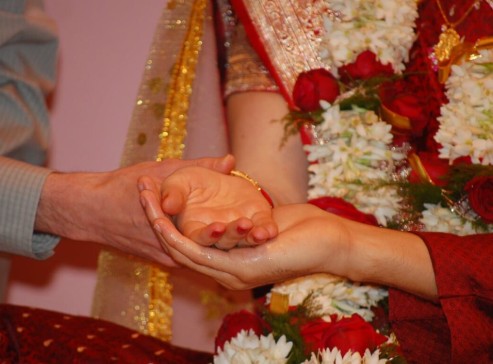
Hasta Milap (Joining of Hands & Souls)
The priest ties the holy knot between the couple. The groom's shawl is firmly tied to the bride's Panetar (wedding saree). The father places the bride's hand into the groom's hand. The bride's mother pours holy water over their joined hands while the priest chants sacred hymns.
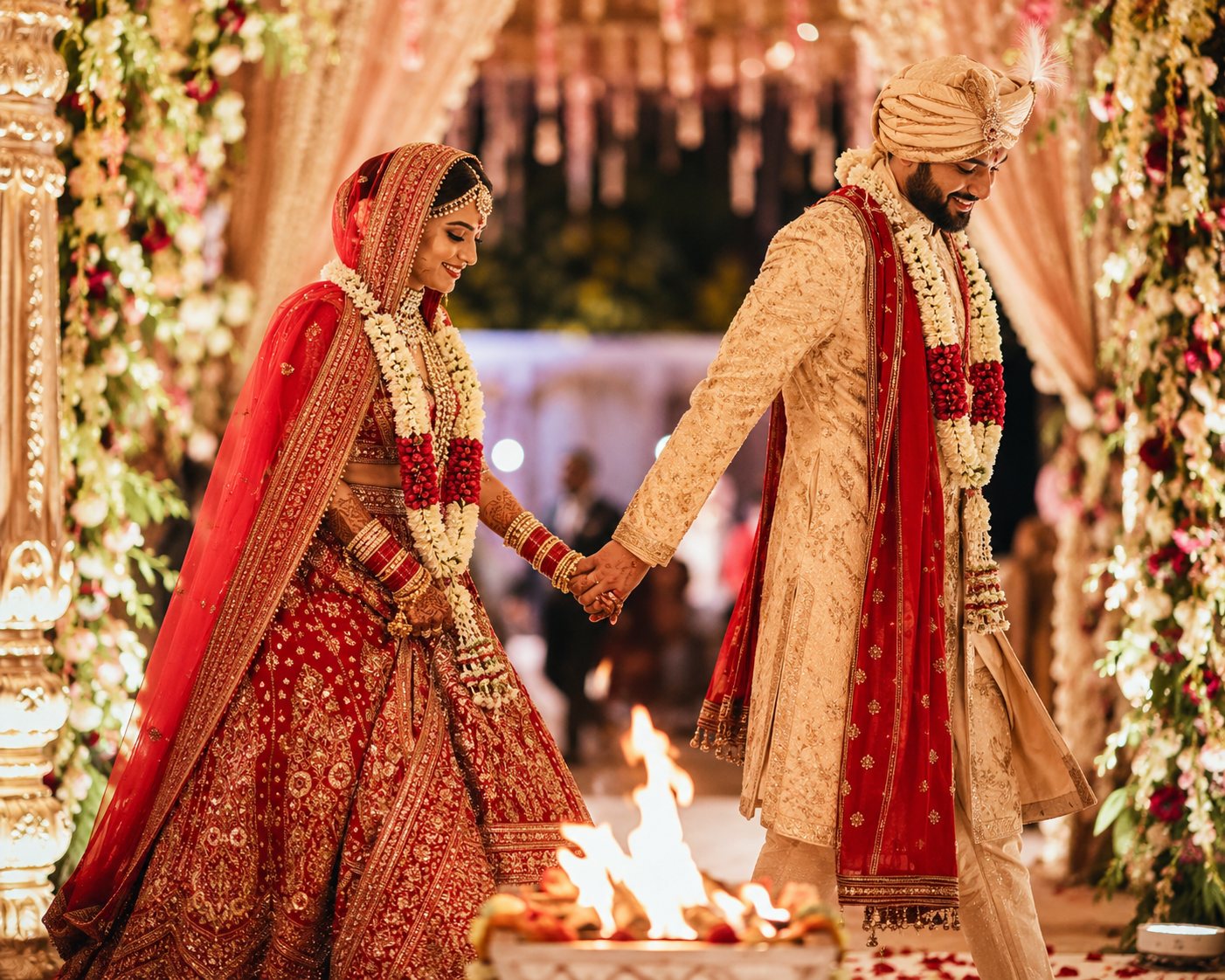
Vivah Mangal Phera (Sacred fire)
The sacred wedding fire (Agni) is lit to serve as a divine witness to the marriage. The bride and groom walk around the sacred fire (Agni) to seal their marriage vows.
While some Hindu traditions perform 7 circles, many communities—especially Gujarati, and Sindhi families—perform 4 pheras. During each round (Phera), bride's brothers offer Jav-tal(Barley & sesame seeds) in bride's hand as offerings to Sacred fire.
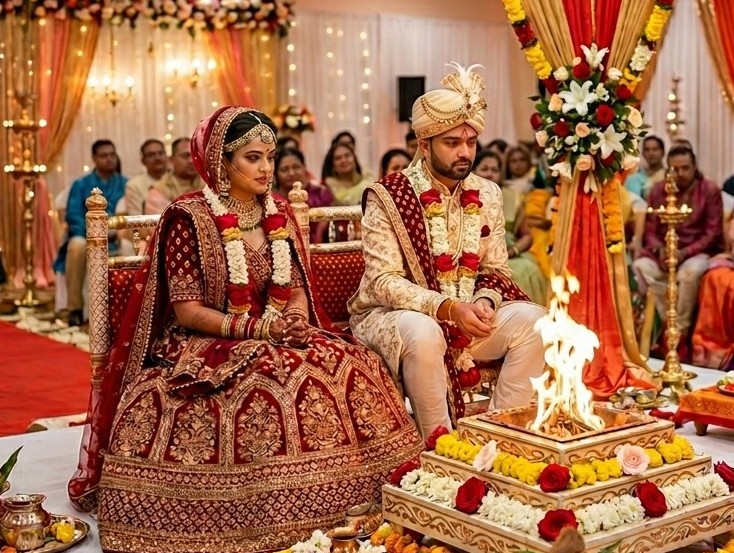
Concluding Mandap Rituals
Immediately following the pheras (sacred circumambulation), final mandap rituals include mangalsutra necklace, applying sindoor (vermilion) to the bride's hair parting, taking blessings from lord ganesha, lord lakshmi narayan, lord shiva, Kuldevi and other gods and goddesses. The bride's mother brings sweets (like kansar) to feeds couple.
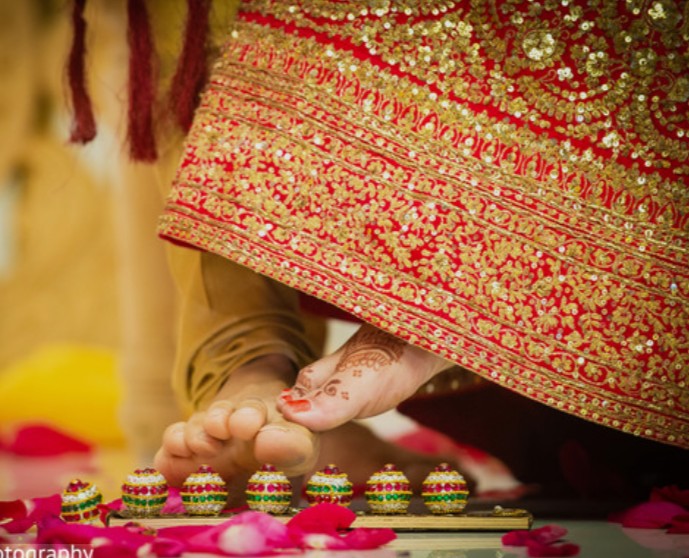
Saptapadi
Saptapadi (meaning "seven steps" in Sanskrit) is the most vital and legally binding rite a traditional Hindu wedding. The bride and groom take seven steps together, sealing their union with a specific vow and blessing for each step.
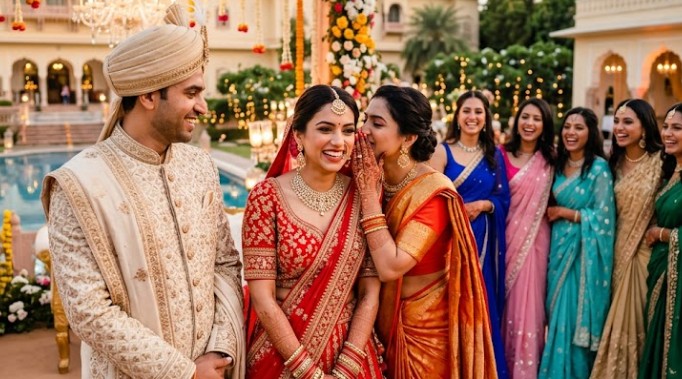
Akhand Saubhagyavati
The phrase "Akhand Saubhagyavati" translates literally to "unbroken, continuous good fortune of a married woman." It is a beautiful post-wedding tradition in Hindu ceremonies where married women whisper blessings and advice into the bride's right ear.
It symbolizes enduring marital bliss, prosperity, and the wish for an unbroken, lifelong marriage.
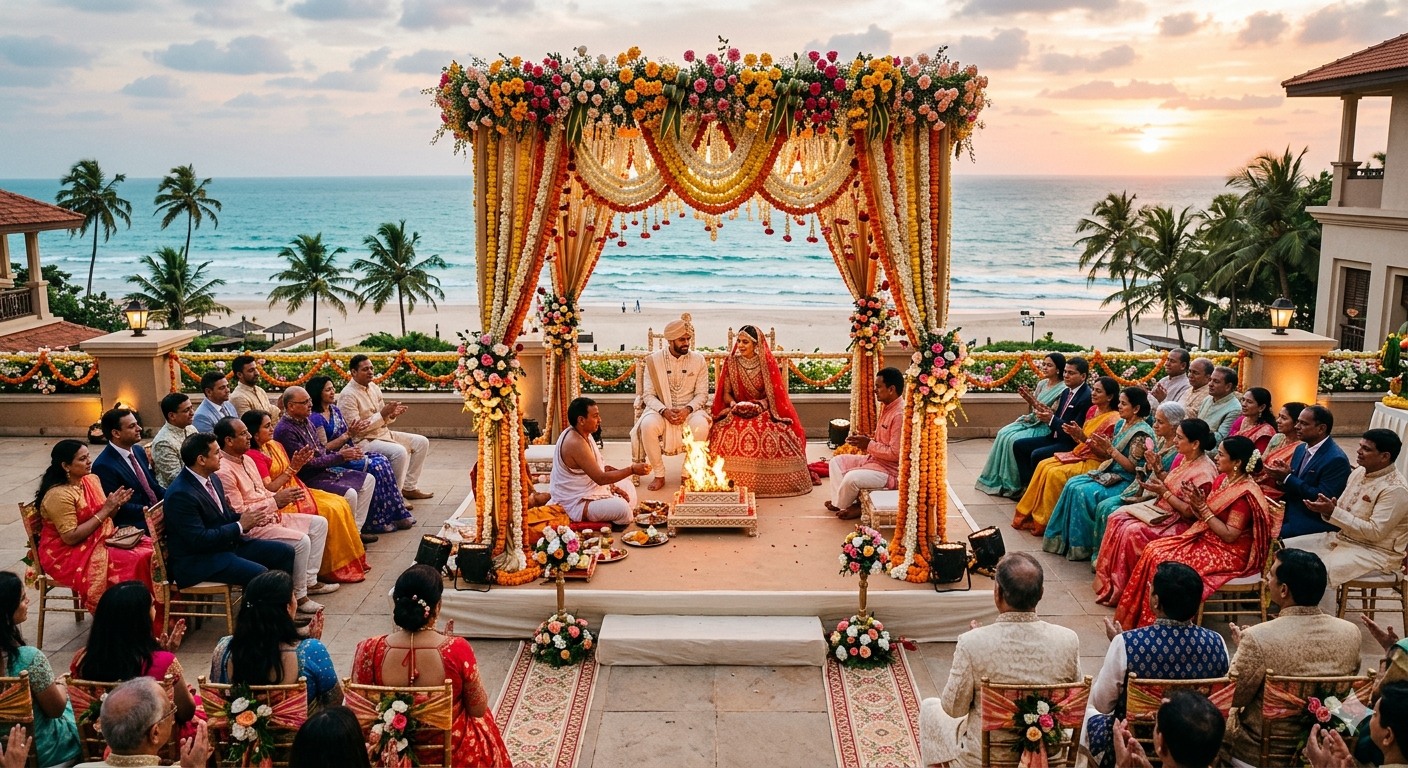
Ashirvaad
In the post-wedding phase, it is a formal and heartfelt event where the newlyweds seek wisdom, support, and good wishes for a prosperous marriage from their parents, grandparents, and extended family.
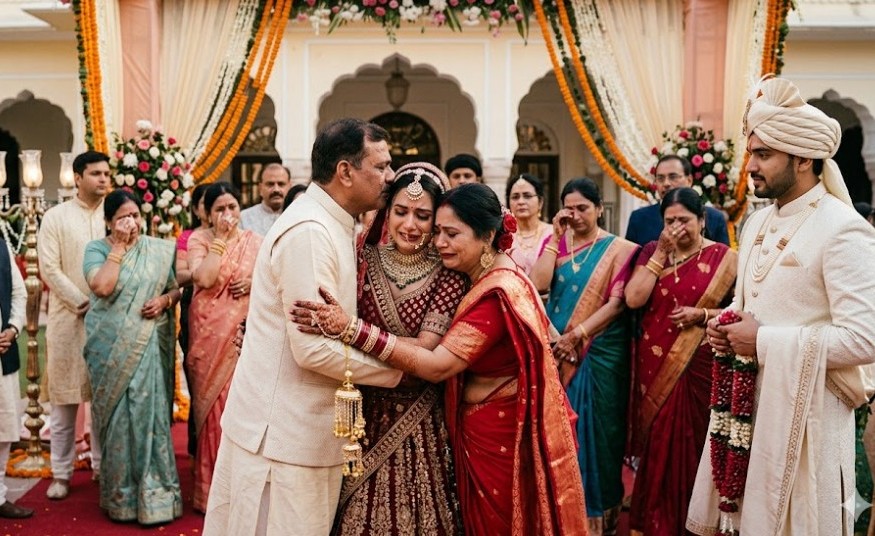
Vidai / Bidaai
It marks the bride's official farewell to her parental home as she leaves to start her new life with her husband and his family. It is characterized by bittersweet tears, embraces, and heartfelt goodbyes between the bride, her parents, and her siblings.
As the bride walks away from the venue, she throws a handful of rice and coins backwards over her head into her family's home.